

Destiny Served in a Soho Restaurant
The history of cinema, and perhaps also that of modern tourism in China, changed forever during a lunch in London, among the tables of Lee Ho Fook, a Chinese restaurant in the heart of Soho. It was the mid-1980s. Jeremy Thomas, a British producer with a flair for the impossible, was perusing the menu when his companion, a certain Bernardo Bertolucci, looked at him with that sly look that blended Emilian intellectual depth with a seasoned cosmopolitan outlook.
“It's strange that you chose a Chinese restaurant,” Bertolucci said, as the waiter set down the dim sum plates. “You must have had a premonition, because I want to make a film in China. Mainly in the Forbidden City.”.
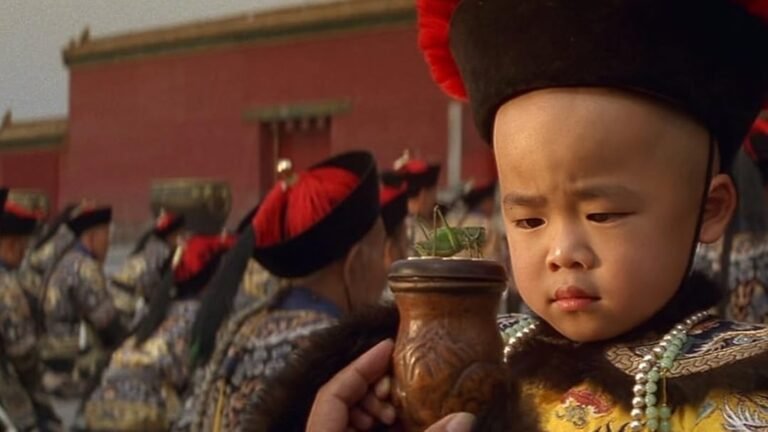
That phrase, uttered with the ease of someone ordering a coffee, marked the beginning of one of the greatest cultural adventures of the 20th century. The Last Emperor It wasn't just a film that won nine Oscars; it was the key that shattered the Western imagination of China, transforming a country perceived as an impenetrable red monolith into a place of heartbreaking beauty.
For us contemporary travelers, following in the footsteps of Puyi—the child who was God, then a puppet, and finally a gardener—means embarking on a pilgrimage that transcends geography. It is a journey both "rhythmic and profound," as we would say, taking us from the majestic halls of Beijing to the history-laden snows of Manchuria, revealing unimaginable anecdotes and secret places hidden deep within the dense alleys of Beijing's hutongs.
Get ready. It won't be a voyage In short. We'll traverse decades of history and miles of film, trying together to understand what it truly means to cross the threshold of the Forbidden City.
Inside the Forbidden City: From Set to Reality

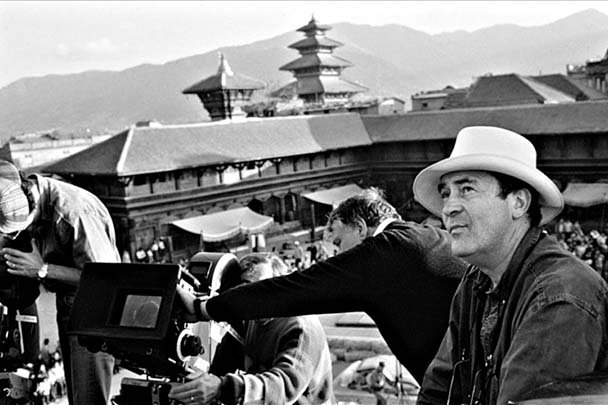
When you set foot in the Forbidden City (Zijincheng), in addition to the initial feeling of wonder, one has a sense of suffocation. The space is designed to intimidate and overwhelm any individual. Built between 1406 and 1420 by Emperor Yongle of the Ming Dynasty, the Forbidden City remained hermetically sealed to any Western fictional film production until 1986. This 720,000-square-meter complex was designed according to the rules of Feng Shui And for Bertolucci, obtaining permission to film here was a diplomatic miracle. Before him, no Western director had ever set up a tripod in these sacred courtyards.
The authorization granted to Bertolucci and producer Jeremy Thomas wasn't simply a bureaucratic permit, but a political act of openness in the post-Mao era, greatly facilitated by the figure of Ying Ruocheng. The latter, in addition to being a talented actor who plays the governor of the re-education prison in the film, was in real life none other than the Deputy Minister of Culture of the People's Republic of China.
And so this convergence of roles allowed the production to gain exclusive use of the Forbidden City, operating with a freedom that would be unthinkable today. For sixteen weeks, the beating heart of Beijing became the exclusive domain of the Italian-British-Chinese troupe. The scale of the operation was titanic: 19,000 extras were recruited, dressed, and given wigs to recreate the coronation ceremonies and court life.
According to legend, the complex has 9,999 and a half rooms. Why "half"? Because only the Jade Emperor, the ruler of the heavens, could possess 10,000 rooms. The earthly Emperor, the "Son of Heaven," had to humbly pause one step short of divine perfection. Walking along the central axis today, from the Meridian to the Gate of Divine Power, one senses this tension between the aspiration to the divine and human reality. Indeed, the structure represents a cosmological diagram in brick and wood, an architectural attempt to anchor Heaven to Earth, designed to be the gravitational center not only of China, but of the entire known universe.
The titanic enterprise
For the scene where little Puyi runs toward the billowing yellow banner and finds himself faced with a sea of kowtow (bowing) dignitaries, Bertolucci didn't use digital effects. They didn't exist. He used people.
Nineteen thousand extras were recruited. Nineteen thousand. Most were soldiers from the People's Liberation Army, lent by the Chinese government at a time of unprecedented openness.
The logistics were both a nightmare and a masterpiece. Imagine having to dress, apply makeup, and manage an army every morning. Giancarlo De Leonardis, the Italian hairstylist, faced an epic challenge: recreating Manchurian hairstyles (shaved forehead and long braid at the back) for thousands of people.
The anecdote circulating among film buffs is that De Leonardis had to import nearly a ton of real human hair to make the wigs and braids.
On set, security was paranoid. Every extra, every technician had to have a pass. One day, the great Peter O'Toole, who played Reginald Johnston (who actually existed—his 1934 book Twilight in the Forbidden City is the primary source for the intimate life of the court during those years), forgot his pass at the hotel.
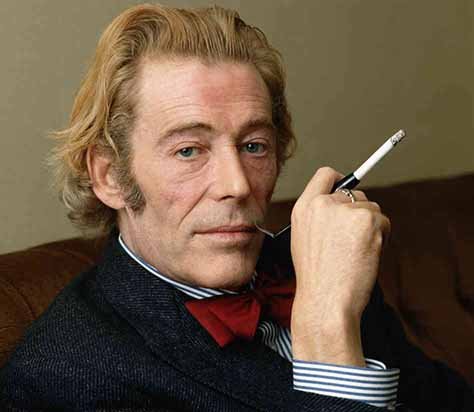

He showed up at the Meridian Gate, perhaps expecting to be recognized. But to the young Chinese guards, he was no Lawrence of Arabia; he was just a tall, lanky Westerner ("a foreign devil") trying to enter without permission. He was denied entry. O'Toole, with his typical British composure (or perhaps with suppressed fury), had to wait on the sidewalk until a production assistant ran to fetch him.
The Royal Incident: Elizabeth II on Set
One of the juiciest anecdotes from this great cinematic opus concerns Queen Elizabeth II's state visit to China in October 1986. The British monarch's visit, historic in every sense, naturally included a tour of the Forbidden City. However, Bertolucci's production had complete control of key spaces, particularly the Hall of Supreme Harmony, and permits were strictly restricted.
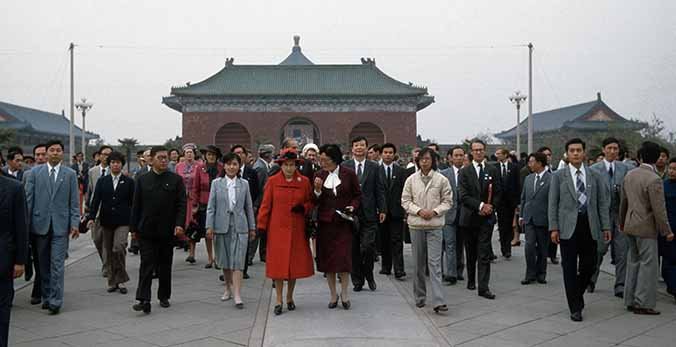
https://www.vanityfair.it/gallery/viaggi-regina-elisabetta-ii-le-foto-piu-belle-avventura-vita-eccezionale
In an ironic reversal of the hierarchy, the “Queen of England” could not visit the Emperor's palace because an "Emperor of Cinema" (Bertolucci) occupied its rooms. The royal visit had to be rescheduled and limited to other areas, demonstrating how, incredibly, for that brief period, cinematic fiction held a sovereignty superior to international diplomacy. A delightful historical paradox!
Spaghetti “Eastern”, rascal nostalgia!
The behind-the-scenes narrative offers hilarious insights into cultural differences. The Italian crew, led by Bertolucci and cinematographer Vittorio Storaro, found themselves working in a still very closed and austere Chinese context. Gastronomic nostalgia became a central theme.
In 1986, Beijing wasn't the cosmopolitan metropolis it is today. Finding a decent plate of pasta, an espresso, or some olive oil was practically impossible. Chinese cuisine is extraordinary and diverse, but for a Roman crew accustomed to rigatoni and amatriciana, months of rice and sautéed vegetables began to feel like exile.
Bertolucci himself, a man who loved life's pleasures, suffered from this lack. It is said that the production team organized air shipments of pasta (some sources cite Barilla, others cite artisanal supplies) directly from Italy, handled with the same care and urgency as virgin Kodak film.
Tons of pasta, espresso, olive oil, and wine were shipped from Italy to Beijing. It's said that an Italian chef was brought in specifically to cook for the crew, creating a Dolce Vita enclave in the middle of the communist capital. This contrast between the Qing Dynasty costumes and lunch breaks filled with spaghetti al pomodoro offers a glimpse of what the film's production environment must have been like. While Puyi was trying to become Western by eating English food and cutting off his ponytail, Bertolucci and his crew were trying to remain Italian by clinging to spaghetti al pomodoro!
Authenticity at All Costs: Furniture and Relics
Another detail that would make some smile today and perhaps horrify museum curators concerns the use of furnishings. In some scenes, especially those filmed inside residential palaces, the production obtained permission to use original Qing Dynasty furniture and carpets, not replicas. This level of material authenticity gives the film a unique veneer of authenticity, but raises interesting questions about heritage conservation that can be discussed and explored during a guided tour of the museums. trips we organize.
Connections between symbolism and film
The director often sought elements of strong scenic, symbolic, and spiritual congruence, relying on the mastery of cinematographer Vittorio Storaro: the roof tiles are a yellow that doesn't exist in nature, an "Imperial Yellow" obtained with secret firing techniques, reserved exclusively for the royal family. The walls are a deep red, which Bertolucci associated with blood and birth.
The architecture of the Forbidden City is a codified language of power where every detail, from color to numerology, is designed to reaffirm imperial supremacy. The visitor finds himself immersed in Imperial Yellow which contrasts violently with the red of the walls, evoking joy and fire. There is one fascinating exception to this golden monochrome: the Imperial Library, covered with black tiles—the color of water—in a sort of architectural spell to protect the precious volumes from the flames.
Even mathematics here becomes mystical with the obsession for the number nine, the figure Yang A supreme power, repeated in the rows of door studs and in the legend of the 9,999 and a half rooms, a limit placed to humbly remain one step behind divine perfection. Finally, raising one's gaze to the sky, one glimpses the swarms of mythical beasts guarding the structures on the edges of the roofs; their number reveals the palace's hierarchy, culminating in the Hall of Supreme Harmony, the only one in the entire empire to boast ten, eternally led by an immortal astride a phoenix.
Storaro, who painted the film with light, used this architecture as a chromatic cage. In the film, red dominates the first part (the birth, the entrance to the palace), yellow childhood (the awareness of imperial identity), and green adolescence (the knowledge brought by the Scottish tutor and the bicycle).
We highly recommend experiencing your visit through Vittorio Storaro's color theory. The film uses colors to mark the stages of Puyi's life. Pay attention:
Red: The blood, the birth, the walls of the palace.
Yellow: The emperor, exclusivity, golden captivity (only the emperor could wear yellow).
Green: Knowledge, introduced by the tutor Johnston and the bicycle.
Grey: The reality of Maoist China, the prison, the final anonymous freedom.
The Emperor and the Bicycle
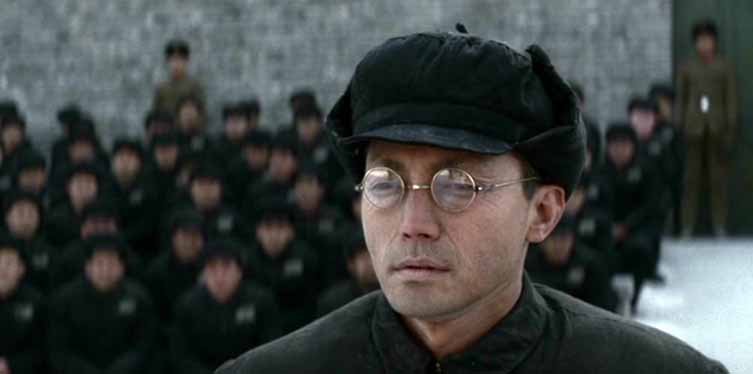
Aisin-Gioro Puyi (1906-1967) ascended the throne in 1908, at just two years old, chosen by the Empress Dowager Cixi on her deathbed, and indeed, as also narrated in the film, he received a bicycle as a gift which he particularly loved.
In 1912, the Xinhai Revolution ended the Qing Dynasty and millennia of imperial rule. However, the new republican government allowed Puyi to retain his title and continue to live in the Inner Court (the northern part of the palace).
This created a surreal situation: a feudal microcosm, complete with eunuchs, court ladies, and ancient rituals, survived hermetically sealed within the heart of a modern republic. Puyi grew up believing he was still master of the world, even though he could not cross the walls of his garden.
As the boy grew up, he was profoundly influenced by his Scottish guardian, Reginald Johnston. The latter (along with Wanrong, the monarch's first wife) brought a breath of modernity: bicycles, cameras, and even tennis entered the ancient walls. But the psychological pressure of living in a constant drama, while outside warlords battled for control of China, began to wear on the protagonists. Glasses, Western magazines, and, most importantly, a bicycle were introduced (it is actually believed the gift was from his cousin Pujia). For a confined teenager, the bicycle represented freedom of movement, albeit limited to the palace walls.
In traditional Chinese architecture, each door features a raised wooden threshold (menkan), often thirty or forty centimeters high. These thresholds served a dual purpose: practical (to prevent the entry of dust and animals) and spiritual. Evil spirits were believed to move only in a straight line and by dragging their feet; therefore, a high threshold was an insurmountable barrier to demons. It also forced those entering to look down, as a sign of respect.
For a cyclist, however, they were a nightmare. Puyi, with the arrogance and desperation of adolescence, ordered them to be sawed off. It was a scandal. The eunuchs and court dignitaries were horrified. Sawing down the thresholds meant inviting demons into the heart of the empire and violating the integrity of the ancestral palace. But Puyi was the Emperor (or at least he still believed he was), and his order was carried out.
More than 30 thresholds were removed or modified in the Inner Court, particularly in the Palace of Heavenly Purity (Qianqinggong) and the Six Western Residences, to allow Puyi to cycle unhindered.
Today, if you visit the Forbidden City with a careful eye, you can still see the “scars” of this act of rebellion!
Now, before proceeding with the article, we propose some gems to save for a visit to Beijing!
Beijing: Hidden Gems and Some Goodies
1. Author's Nightlife & Hutong
Where old Beijing meets the hipster and jazz scene.
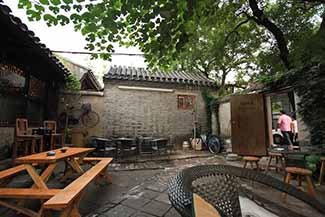
Credit: https://www.intravino.com/primo-piano/la-scena-birraia-di-pechino-e-una-discreta-figata/
- Modernist (44 Baochao Hutong)
- The Vibe: It's like a time machine. Located in a former theater/cinema that survived the "Great Brickening," it evokes the Belle Époque with black and white checkered floors, dark wood and soft lighting.
- The Experience: Live music (jazz, swing, gypsy) and craft cocktails (we recommend the Old Fashioned or Absinthe).
- Why go there: To feel like you're in a Woody Allen film set in China or imagine Puyi as a hipster in the 1920s.
- Note: Average food, but wonderful drinks and atmosphere. Perfect for after-dinner drinks.
- Peiping Machine (Nafu Hutong)
- The Vibe: A craft brewery located in a former industrial space hidden among the ancient alleys.
- The Experience: The design blends raw industrial with tradition. The specialty here is Peking beer.
- Target: Young and design-conscious audience.
- Great Leap Brewing (Doujiao Hutong)
- The Vibe: One of the first craft breweries, located inside a traditional courtyard (Siheyuan).
- Why go there: To drink excellent beer sitting outdoors in an authentic setting, far from the neon lights of the commercial districts.
2. Rooftop & Café with a View
To observe the “sea of gray roofs” and listen to the sounds of the city.
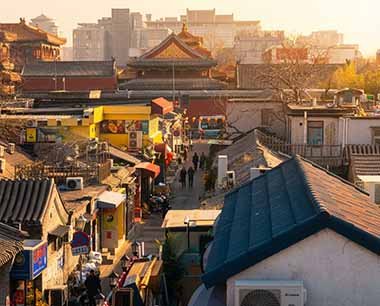
- Berry Beans (Zhujia Hutong, Qianmen area)
- The Location: A cafe located in a former pleasure house (the area was a red-light district in the Qing era).
- The Experience: Go up to the second floor. It's not a skyscraper, but a rooftop intimate that looks out onto the curved, grey roofs.
- The Must: Order a “Brown Sugar Cinnamon Latte” and listen to the pigeons with whistles tied to their tails (a ghostly, melodious sound unique to Beijing).
- Toast at The Orchid / Libertango (Gulou)
- The Location: Secret rooftops hidden in the hutongs.
- The Experience: They offer a quiet retreat with views of the Drum Tower and surrounding rooftops.
- The Moment: Ideal for an “Instagrammable” but authentic sunset, far from the chaos.
- Full Ding (Wudaoying Hutong)
- The Location: In one of the most hipster hutongs, near the Lama Temple.
- The Experience: A terrace café. Perfect at sunset to see the contrast between the gray roofs of the houses and the golden tiles of the temple.
3. Sanctuaries of Design and Culture
Scenic libraries and art districts.
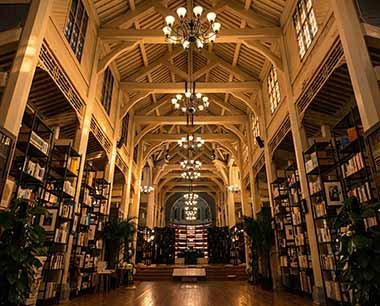
- Page One (Beijing Fun, Qianmen area)
- The Vibe: A masterful bookshop with white interiors, mirrors, and soaring ceilings. Open late.
- The Gem: The huge panoramic windows on the second and third floors frame the Zhengyangmen (Gate of the Sun).
- The Emotion: At night, the illuminated door seems to float in the darkness. A powerful contrast between the silence of the books and the monumental history outside.
- Mofan Bookstore
- The Vibe: Libraries located in historic buildings (former Anglican churches or republican buildings).
- The Experience: A sacred atmosphere, hand-bound books. A place of silence and aesthetic beauty for bibliophiles.
- 798 Art District
- The Council: Don't limit yourself to the main streets. Look for the small, experimental galleries and cafes hidden in the alleys of the former Bauhaus factories.
- The Detail: Observe where 1950s communist propaganda (slogans on the walls) meets subversive contemporary art.
4. The “Ghosts” of the Forbidden and Imperial City
Hidden details to avoid mass tourism.
- Palace of Gathered Elegance (Chuxiugong – Forbidden City)
- What to look for: Wanrong's residence. Looking through the dusty glass, you can see a cast-iron bathtub and European mirrors, symbols of her attempt at Westernization.
- Lodge of Spiritual Well-Being (Yangxingdian – Forbidden City)
- What to look for: The small, intimate place where Puyi abdicated. Here, history has silently changed.
- Tip: Visit in winter for the contrast of white snow, red walls, and yellow roofs.
- Echo Wall (Temple of Heaven)
- The Secret: Go at dawn (6:30-7:00) to avoid the crowds.
- The Experience: Whisper into a wall so your friend can hear you clearly from 50 meters away (sound wave physics that seems like magic).
5. Bonus Track: Changchun (Manchuria)
Changchun is outside the mass circuits, but for us it is essential.
- Zhe You Shan (This Mountain)After the heaviness of the Puppet Palace, head to this incredible mall. They've built an artificial "mountain" inside the mall, complete with paths, caves, and statues. It's Chinese kitsch at its finest, but it offers great food and a lively atmosphere that contrasts with the city's dark history.
- Tram 54Take the historic tram line 54. The green carriages, the wooden interior, the sound of the rails in the snow… it's a journey back to 1940. Perfect for melancholic, cinematic-style photos.
If you wish, you could stop reading here, but for those with a keen eye we suggest continuing, especially if you intend to visit China 😉
MORE INFORMATION FOR THE CURIOUS:
From real-life characters to the history of the Forbidden City
The reality of life in the Forbidden City in the 1910s and 1920s was far from the splendor depicted in tourist guides.
The eunuchs, once efficient servants, had become a corrupt and uncontrollable power. They systematically robbed the imperial treasury, selling priceless antiquities to Beijing's antique shops. In the film The Last Emperor, we see the burning of the storehouses: this is a historical fact. In 1923, Puyi ordered an inventory of the Palace of Built Happiness (Jianfugong), where Qianlong's treasures were stored. That night, a mysterious fire destroyed everything. It was almost certainly started by the eunuchs to cover up the extent of their thefts. This event prompted Puyi, encouraged by Johnston, to expel most of the eunuchs from the palace, an unprecedented act of disruption.
Puyi's life was marked by absolute solitude. "I had no playmates," he wrote, "only servants who bowed to me." His childish cruelty (he whipped eunuchs for fun) was a symptom of an upbringing devoid of empathy and boundaries, where every whim was law.
Characters between Reality and Fiction
Bertolucci's film is a work of art, but let's dig into the real biographies to understand who these people really were.
Aisin-Gioro Puyi:
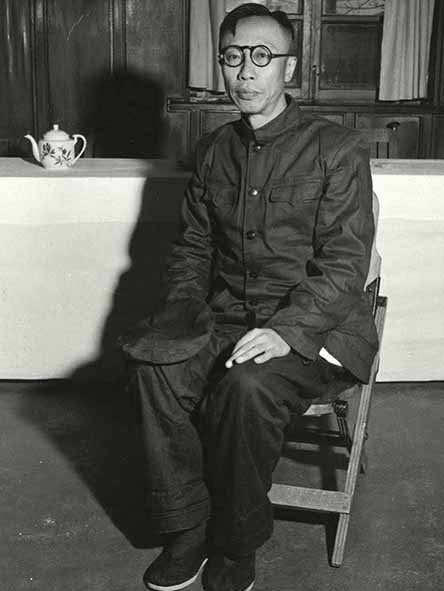
(Credit: Author unknown. Copyright holders can contact us for attribution or removal.)
John Lone offers a melancholy and at times heroic portrait of Puyi. The reality was more pathetic and ambiguous. Puyi was not only a victim; he was also a willing collaborator. His obsession with the restoration of the Qing Dynasty blinded him to Japanese manipulation.
SexualityHistorians still debate Puyi's sexuality. It is widely accepted that he was either sterile or impotent, and many suggest homosexual tendencies (he had intense relationships with young eunuchs and pages). His marriage to Wanrong was never consummated, which contributed to her despair.
CrueltyThe film omits the more unpleasant details of his youth, such as his tendency toward sadism toward his servants. However, his final transformation into a commoner, a gardener and archivist, is true and documented. He died of kidney cancer in 1967, during the Cultural Revolution, a man who had seen the world turn upside down several times.
Sir Reginald Johnston: The Scottish Mandarin
Reginald Fleming Johnston (1874-1938) was not just a tutor. He was an experienced British colonial administrator (he had governed Weihaiwei) and a profound sinologist, in love with traditional Chinese culture, a practicing Buddhist, and fiercely anti-missionary.
Residence in the Forbidden CityJohnston was the first foreigner to live in the Inner Court. He was assigned quarters near the north gate, an unprecedented privilege. Sources confirm the existence of "Reginald Johnston's House" within the complex, a small courtyard where he received visitors and wrote. He also had a residence at the New Summer Palace.
Royal InfluenceThe scene where he gives Puyi the bicycle and glasses is historically accurate. The bicycle (Puyi owned several) changed the emperor's physical perception of space, and he had the raised wooden thresholds of many doors sawn down so he could pedal freely. The glasses were a political battle: the court believed that the emperor, being perfect, could not have any visual defects. Johnston threatened to resign and won.
The Book: His book Twilight in the Forbidden City (1934) is the primary source for the intimate life of the court in those years, although it is partial and permeated by his monarchist and romantic vision.
Wanrong: The Tragedy of the Opium Empress
Gobulo Wanrong (1906-1946) is perhaps the most tragic figure. Educated in American schools in Tianjin, she spoke English, played the piano, and loved jazz. She dreamed of being a modern woman, but ended up trapped in a medieval marriage.
The DescentIn the film, we see her elegantly slipping into opium. In reality, her addiction was devastating and grotesque. In Changchun, Manchukuo, she lived a recluse, consuming up to 200 mg of opium a day. She became skeletal, stopped bathing, lost her sight due to malnutrition, and lived in a state of constant delirium alternating with maniacal fury against her father, who had "sold" her out of ambition.
AdulteryYes, she had extramarital affairs, likely with two of Puyi's chauffeurs/bodyguards (Li Tiyu and Qi Jizhong). She became pregnant. When the baby was born in 1935, doctors immediately killed her on Puyi's orders (some say by lethal injection, others that she was thrown into a boiler). Wanrong was told that the baby had been entrusted to a wet nurse. Discovering the truth contributed to her final psychological breakdown.
The EndWhen the Soviets invaded Manchukuo in 1945, Puyi fled by plane (later captured by the Russians), abandoning Wanrong and the court. Wanrong was captured by the Chinese Communists. Dragged like a war trophy through Manchuria in the dead of winter, she died alone in Yanji Prison in June 1946. According to the memoirs of Saga Hiro (Puyi's brother's wife), she was found delirious in a pool of her own excrement. Her body was thrown into an unmarked mass grave. There is no grave for the last Empress of China.
Wenxiu: The Divorce
Wenxiu (1909–1953) is the unsung heroine. In 1931, she committed the most modern act of all: the “Concubine Divorce.” She escaped from the Tianjin residence with the help of her sister, went to a hotel, and sued the Emperor. Her legal grounds included the unconsummated marriage (“nine years without intimacy”) and psychological abuse.
The case became a national scandal. Puyi, humiliated, granted her divorce but stripped her of her titles. Wenxiu then lived as a teacher, married a Nationalist major, and ended her days working as a proofreader and factory worker, dying poor but free in 1953. Her courage broke the age-old taboo of imperial infallibility.
Amakasu Masahiko: The Bogeyman and Cinema
Ryuichi Sakamoto (Tokyo, January 17, 1952 – Tokyo, March 28, 2023 – famous and award-winning Japanese composer, musician and actor, pioneer of electronic music and author of iconic soundtracks) portrays Amakasu as an elegant and nihilistic spy. The real Amakasu Masahiko (1891-1945) was even more complex.
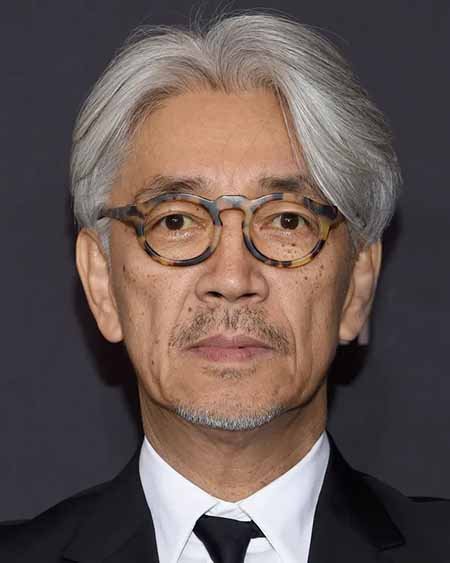
Credit: https://goldenglobes.com/person/ryuichi-sakamoto/
The AssassinHe became famous in 1923 for the "Amakasu Incident," in which he strangled the anarchist Sakae Ōsugi, his wife Noe Itō, and their six-year-old grandson in the chaos of the Tokyo earthquake. Convicted, he served a few years and was released, becoming a hero to the far right.
The Boss of Cinema: In Manchukuo, Amakasu became the head of the Manchukuo Film Association (Man'ei). Besides being a policeman, he was a media mogul. He tried to use cinema to propagate the ideology of the "Five Nations Concord." He was the mentor of the famous actress/singer Yoshiko Yamaguchi (Li Xianglan), a Japanese woman born in China who passed herself off as Chinese.
The Film “China Nights”: Amakasu produced controversial films such as Shina no Yoru (1940), where a Chinese woman falls in love with a Japanese officer who slaps her. For Amakasu and the Japanese public, the slap was a sign of “corrective love”; for the Chinese, it was the supreme humiliation of their nation.
DeathHe didn't shoot himself theatrically like in the movie. On August 20, 1945, with Soviet tanks at the gates of Changchun, he took a potassium cyanide pill and died in his office at Man'ei.
The History of the Forbidden City and the Great Dream of the Yongle Emperor
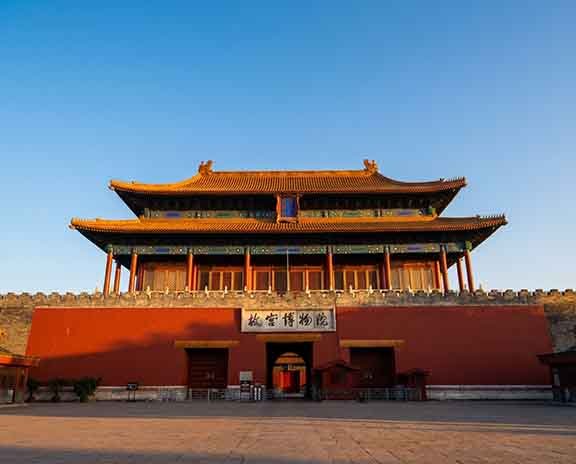
Paradoxically, the epic of the Forbidden City begins not in Beijing, but in Nanjing, amid the intrigues of a brutal civil war that brought the usurper Zhu Di, later Emperor Yongle, to the throne. It was he who engineered one of the boldest geopolitical moves in history: moving the heart of the empire north, to ancient Beiping.
A decision driven by a lethal mix of paranoia and strategic vision: by moving his court, Yongle adopted the "Emperor Guarding the Gate" policy, positioning himself on the frontier to peer into the Mongols' eyes and ensure an immediate military response. At the same time, the move allowed him to escape the hostile southern nobles and reestablish his power in a loyal stronghold, distancing himself from his father's shadow.
Finally, it was guided by sacred geography: the authority had to sit in the North and look towards South, dominating everything "under heaven" (Tianxia). It was the beginning of a titanic undertaking that, from 1406 to 1420, would change the face of China forever.
An impossible logistics
The empire was drained of resources to realize Yongle's vision.
Nanmu Wood: The load-bearing columns of the large halls required entire trunks of Nanmu (Phoebe zhennan), a precious, dense, and aromatic wood that grew only in the inaccessible jungles of the southwest (Sichuan and Yunnan). Teams of loggers were sent on missions that lasted years; many died of disease or accidents. The logs were floated down rivers to the Grand Canal and then hauled north. It was said that "a thousand entered the junta, five hundred returned.".
The Golden Bricks (Jinzhuan)The floors of the main halls were not made of gold, but of Suzhou clay bricks of such quality that they were worth as much as gold. The production process took nearly two years: the clay was filtered, kneaded, left to settle, and then fired for 130 consecutive days with different types of wood to vary the temperature. Once finished and polished with tung oil, these black bricks resonated with a metallic timbre when struck and were said to keep the rooms cool in summer and warm in winter.
The Transport of StonesHuge blocks of marble, some weighing over 200 tons, had to be transported from the Fangshan quarries, 70 kilometers away. The cart wheels would have broken under the weight. The solution was ingenious: they waited for winter, dug wells along the road to draw water, which was then poured onto the route to create an ice rink. The workers then towed the monoliths, sliding on the ice.
Feng Shui and sacred geometry
The Forbidden City was designed not only by architects, but by geomancers. Feng Shui (Wind and Water) dictated every angle, every height and every color.
The Celestial Axis
The heart of the project is the North-South Central Axis. This invisible line runs through Beijing, connecting the city gates, the imperial palaces, and the Drum and Bell Towers. It is the axis along which imperial power flows. The Emperor, seated on the Dragon Throne in the Hall of Supreme Harmony, was perfectly aligned with the Pole Star, the immobile center of the sky around which all other stars revolve. The palace is therefore the terrestrial projection of the "Purple City" (the circumpolar constellation where the Celestial Emperor resides).
The Artificial Mountain and Water
A fundamental principle of Feng Shui requires that an auspicious site have a mountain at its back (to the north) to protect from icy winds and evil spirits (which travel in a straight line from the north), and flowing water in front (to the south) to retain Qi.
Beijing is a flat alluvial plain. There were no mountains north of the chosen site. Yongle's solution was titanic: the earth excavated to create the 52-meter-wide moat was piled north of the palace to create Jingshan (Prospect Hill), also known as Coal Hill. This artificial mountain, nearly 50 meters high, completed the perfect geomantic diagram, protecting the inner courtyard.
To the south, the “River of Golden Waters” was channeled to flow in front of the main halls, curving like a Mongolian archer’s bow to “break” arrows of negative energy.
Manchuria: The Shadow Realm and the Japanese Link
Changchun (Xinjing): The Forgotten Capital
To complete the story of The Last Emperor, the journey must move north, to Manchuria (now the Dongbei provinces), and specifically to Changchun. Here, in 1932, Puyi became emperor of the Japanese-controlled puppet state of Manchukuo. Changchun was renamed Xinjing (“New Capital”) and transformed into a model of Japanese colonial urban planning.
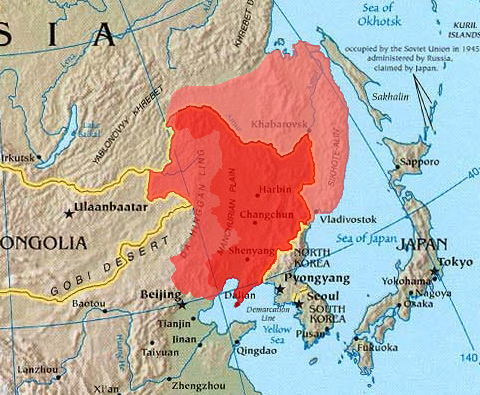
The Puppet Government Palace (Wei Huang Gong)
If the Forbidden City is grand and mystical, the Manchukuo Imperial Palace Museum Changchun is claustrophobic and disturbingly modernistic. It's the setting for the second part of Puyi's real life (and the film).
The Tongde Building: Built by the Japanese for Puyi, it is an imposing palace with a gold-tiled roof but interiors that blend Chinese and Western styles. Puyi refused to live there, suspecting it was riddled with Japanese-installed bugs, and preferred to reside in the more modest Jixi building.
The Jixi Building: Visiting this site allows you to experience Puyi's "luxury prison" firsthand. You can see the rooms where he signed decrees without reading them, the room where his wife Wanrong sank into opium addiction, and the underground air raid bunker. It's a place of great historical tension, crucial to understanding the film's drama. The complex included a tennis court, a small golf course, and a swimming pool. Puyi tried to live like an English gentleman while his people were being brutalized.
Ryuichi Sakamoto and Amakasu: In the film, the Japanese jailer/manipulator Amakasu is played by Ryuichi Sakamoto, a great composer and artist. Amakasu was a real historical figure, the head of the Manchukuo Film Association (Man'ei), which was based in Changchun. Visiting the former Changchun film studios (often called the "Hollywood of the East") creates an additional layer of meta-cinema: the place where Japanese propaganda was created is now a film museum.
Architecture of Power: The Eight Great Ministries (Ba Da Bu)
Changchun preserves a unique architectural heritage in China: the buildings of the "Eight Great Ministries" of Manchukuo. Built in an eclectic style combining traditional Asian elements (large curved roofs) with reinforced concrete structures and Western neoclassicism, these buildings (now schools, hospitals, or government offices) are silent witnesses to a failed imperial utopia. A stroll along Xinmin Avenue allows you to admire these imposing structures, offering a sharp visual contrast to the hutongs of Beijing or the skyscrapers of Shanghai.
The Connection with the Japan
Manchuria is the natural bridge to Japan.
Sakura (Cherry Trees): Japanese colonizers planted thousands of cherry trees in Changchun and Dalian to "Japanize" the landscape. Today, the cherry blossoms in these cities are spectacular but carry a historical melancholy. It's an experience of hanami different, less festive and more reflective than that of Kyoto.
Link with the people Ainu: Anthropological studies suggest ancient ties between the Tungusic peoples of Manchuria and the Ainu. Our tailor-made trips can include an extension from Manchuria to Japan (via Dalian or direct flight), allowing you to explore the indigenous roots of East Asia, following the common thread of the "border peoples.".
Conclusion
Bertolucci's film ends with a scene of heartbreaking sweetness. Puyi, now elderly and free, buys a ticket to visit the Forbidden City. He doesn't enter through the central gate reserved for the Emperor, but through the side one, like everyone else.
He approaches the throne and finds the cricket jar he hid as a child. He opens it, and the cricket comes out, still alive.
It's a powerful metaphor. Dynasties fall, empires crumble, ideologies change (from feudalism to communism), but the spirit—represented by the cricket—survives. Or perhaps it's memory that survives, we don't know.
Visiting China today, following this itinerary, means accepting that history is not a textbook. History is made up of seemingly subtle details, which silently preserve the world we live in today.
Puyi ended his days working at the Beijing Botanical Gardens. Perhaps, after being the master of everything and then the master of nothing, he found peace only by tending plants, the only creatures that didn't bow to him out of obligation, but grew toward the sun by nature.
Have a good trip, or Yī lù píng'ān. May your path be free of “too high thresholds.”.
A hug from Lechuguita 🙂
If you want to organize a trip to China, you can contact us here: https://lechuguita.art/il-tuo-viaggio-su-misura-in-cina/