

In summaryA trip to Morocco is not just a journey through imperial cities and golden deserts, but an encounter with people, scents, and traditions that reflect a way of life. In Meknes, among the quiet alleys of the medina, a simple mint tea becomes the gateway to unforgettable hospitality.
This trip in Morocco It was a gift, in the broadest sense of the word. A birthday present, of course, but also a gift of horizons ablaze with sunset, a treasure trove of spicy flavors, of smiles that ask nothing in return. A tapestry woven of scents and humanity.
For me, every journey is a quest, a pilgrimage to new places, new ways of living, cooking, celebrating, and being together. What we call "culture" is a web of gestures and habits, a background melody that has accompanied us since childhood. Encountering unknown worlds necessarily opens up new perspectives, something we hadn't considered, something that makes us more aware, that enriches us. A bit like learning to dance to a different tune, opening the soul to unexplored vistas.
Morocco, so close yet so magically other, was the perfect teacher in this art. Not too far from Italy geographically, it's a country capable of transporting you to an exotic landscape of colors, scents, and age-old traditions in just a few hours' flight. I approached all this with curiosity and gratitude, ready to embrace what each encounter had to tell me, ready to embrace what the road had in store for me.
Meknes, an Oasis of Peace among the Imperial Cities
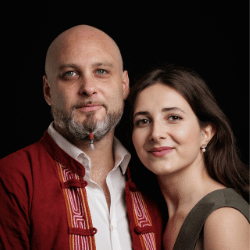
I will tell the story of Morocco through the story of Amina, the faithful guardian of the riad who welcomed us in Meknes, one of the four imperial gems of Morocco.
We disembark on a late November afternoon, when the golden sunlight caresses the outlines of the buildings, igniting every surface it encounters with a warm, mystical energy.
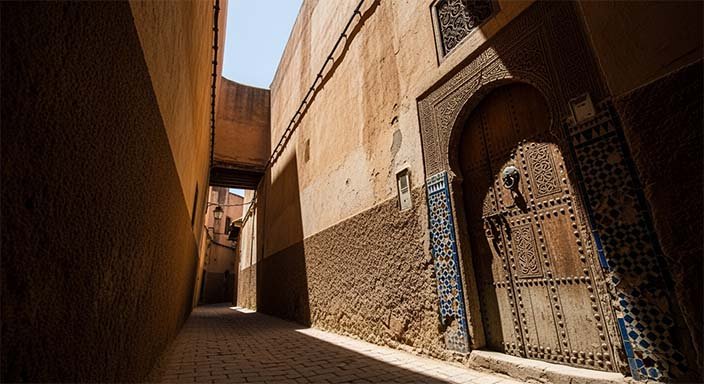
The car leaves us at the edge of the medina, a small labyrinth of alleyways, impossible to decipher at first glance. It seems to whisper secrets at every turn, and we pass through it with our hearts in our throats and our eyes filled with wonder, trying to imprint every turn in our memory, each of those crossroads marked by doors bordered with refined and ancient handcrafted decorations such as zellige, tile mosaics inlaid with intricate patterns and colors like cobalt blue and emerald green.
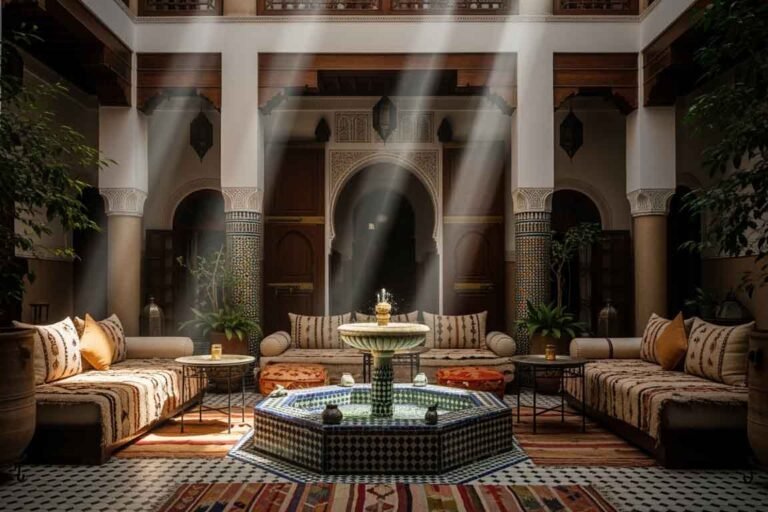
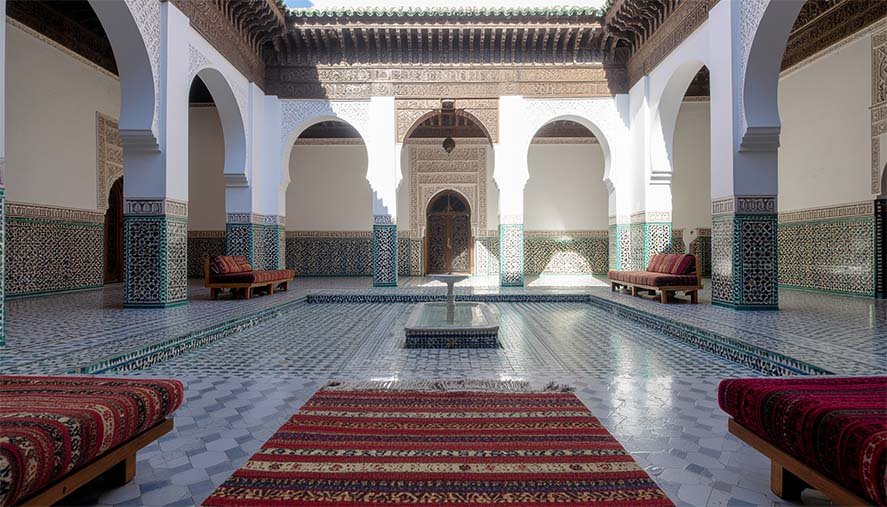
After the days spent at Fez, Immersed in the overwhelming chaos of its kasbah – a maze of streets considered among the largest in the Arab world – Meknes appears to us as an oasis of tranquility. One of the magics of Morocco is precisely this: in just a few steps you can slip from the din of the souks to absolute peace. Just cross the threshold of a riad: with a simple, almost anonymous exterior, and secret gardens, fountains, mosaics, and silence inside. Here, time is marked only by the trickling of a fountain.
Want to explore the Imperial Cities with an itinerary designed just for you, away from the crowds? We can create it together.
The Encounter with Amina: The Tea Ritual and the Scent of Hospitality
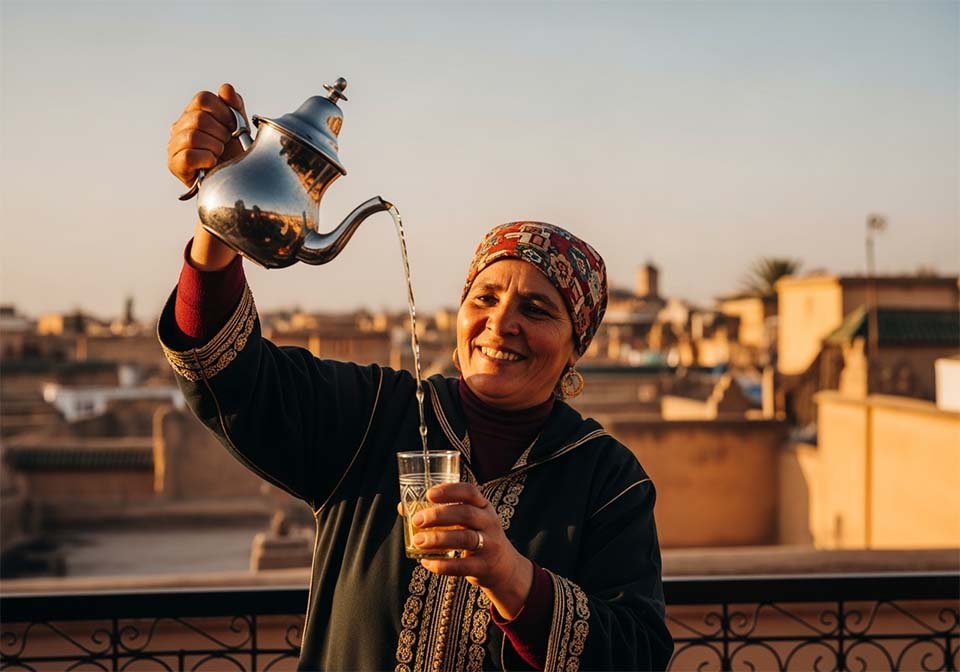
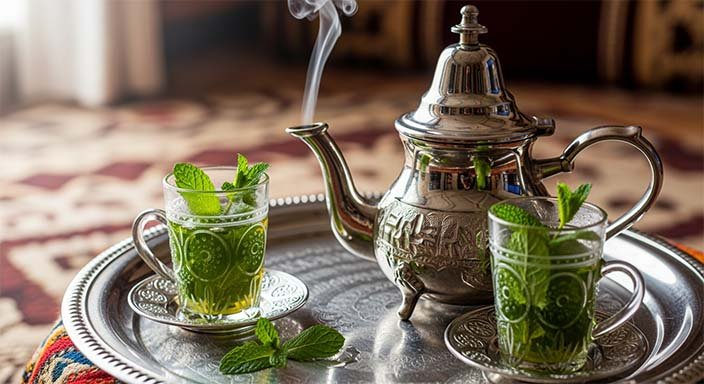
It's here, in this peaceful haven, that we meet Amina. Her smile is a welcome beyond words. She leads us to our room, a blaze of Berber carpets and warm colors, and then leads us to the terrace. There, the most sacred of rituals, the atay, awaits us: mint tea is poured from above with solemn gestures into berrads, small, hand-decorated, stained glass cups, as per Moroccan tradition.
Amina speaks with a torrent of enthusiasm. She speaks of hospitality as a calling, of cooking as an act of love, of the care with which she prepares every detail for her guests.
Hers is a story of courage and rebirth: a nurse by training, she met her husband in the hospital wards. Together, they brought their dream of this riad to life, a youthful project that embodies a lifetime of dedication.
With the pride only a mother knows, she tells us about her daughter living in Italy. Every dish she cooks, every guest she welcomes, is a thread that ties her roots to her future.
Moroccan Bread Recipe: A Lesson in Patience and Love
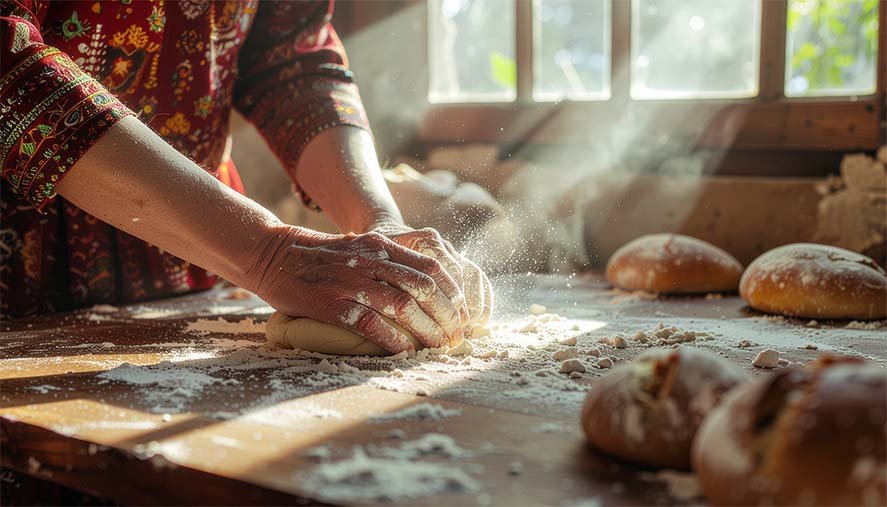
That evening, wrapped in the warmth of tea, I ask her the recipe for that fragrant bread whose aroma had by now filled the air. Amina smiles, and her words become poetry.
«Bread is simple, but it requires patience. Flour, salt, yeast dissolved in warm water, and a pinch of sugar. The dough must become one with your hands, soft and elastic. Then you cover it and wait. The bread rises on its own; you just have to give it time, like with people. You divide it, press it gently, and wait some more. Finally, the oven turns it to gold. The secret? Never rush. Bread senses everything.
In that moment, I understand that she's not just giving me a recipe. She's sharing her philosophy: care, patience, and hospitality. Moroccan bread, like hospitality, is an art that requires time and love.
On the morning of our departure, as we were saying goodbye, Amina handed me a small canvas bag. Inside, still warm, were some freshly baked traditional pastries filled with pistachios and honey.
«For the trip,» he tells me with a smile.
I resume my journey and understand that true journeys never end when you return home. They continue within you, every time a scent, a melody, a taste, or a gesture brings you back to that encounter, to that moment, giving meaning to our existence.
Shukran, thank you.
Why a trip to Morocco stays in your heart
Thus, between the smell of freshly baked bread and the sweet taste of mint tea, Meknes taught us that the’Moroccan hospitality it's not just a gesture, but a way of life.
It's these moments—simple and authentic—that make a trip unforgettable: a meeting in a riad, a shared smile, a cup of tea sipped slowly while gazing at the sky turning red at sunset.
This is Morocco: a country that welcomes you as a guest and lets you go as a friend, with a heart full of stories and flavors.
👉 Tell us your dream: let's plan your next trip together.
TO STAY UPDATED, FOLLOW US ON INSTAGRAM: Lechuguita Vibes & Lechuguita Photos
✨ If you dream of a trip like this, not as a tourist but as a guest, an immersion in stories, traditions and real encounters, then we are ready to design it with you.
With our tailor-made itineraries, We transform your idea of Morocco into a real experience, tailored to your desires.
👉 Tell us your dream: let's design a unique experience together.
A hug from Lechuguita
FAQ – Travel to Morocco and Accommodation in Meknes
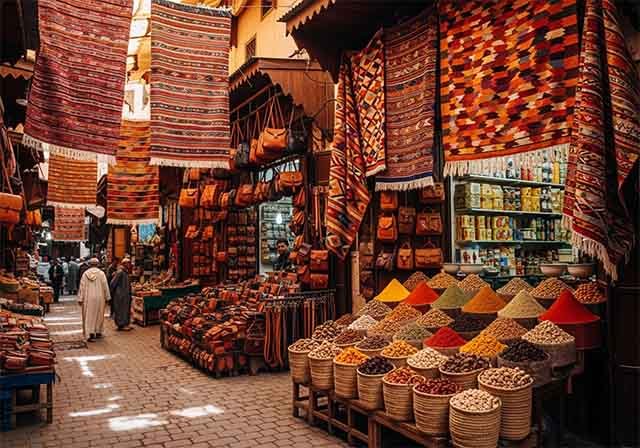
A trip to Morocco is an experience that combines breathtaking landscapes, such as the Sahara Desert and the Atlas Mountains, with a rich cultural heritage of medinas, colorful markets, the scents of spices, and authentic hospitality.
Meknes is one of Morocco's imperial cities, quieter than Marrakech and Fez, but equally charming. Its medina, hidden riads, and relaxed atmosphere make it a perfect stop for those seeking authenticity.
A riad is a traditional Moroccan house with an internal courtyard, often converted into a hotel. From the outside, it appears simple, but inside, it boasts gardens, mosaics, fountains, and peaceful spaces.
Mint tea, also known as "Moroccan whisky," is much more than a beverage: it's a symbol of hospitality and conviviality. It's served to guests with a precise ritual, pouring it from above to oxygenate the drink and create its characteristic foam.
In addition to homemade bread and mint tea, Morocco offers iconic dishes such as couscous, tagines of meat, fish and vegetables, harira (traditional soup) and almond and honey sweets.